Sponsored
Sponsored
Free Edition
Verified Content
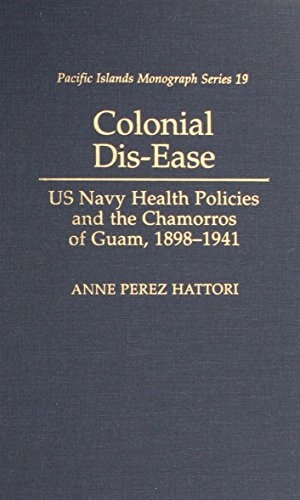
Colonial Dis-Ease: US Navy Health Policies and the Chamorros of Guam, 1898–1941 (Pacific Islands Monograph Series)
Overview
A variety of cross-cultural collisions and collusions--sometimes amusing, sometimes tragic, but always complex--resulted from the U.S. Navy's introduction of Western health and sanitation practices to Guam's native population. In Colonial Dis-Ease, Anne Perez Hattori examines early twentieth-century U.S. military colonialism through the lens of Western medicine and its cultural impact on the Chamorro people. In four case studies, Hattori considers the histories of Chamorro leprosy patients exiled to Culion Leper Colony in the Philippines, hookworm programs for children, the regulation of native midwives and nurses, and the creation and operation of the Susana Hospital for women and children.
Changes to Guam's traditional systems of health and hygiene placed demands not only on Chamorro bodies, but also on their cultural values, social relationships, political controls, and economic expectations. Hattori effectively demonstrates that the new health projects signified more than a benevolent interest in hygiene and the philanthropic sharing of medical knowledge. Rather the navy's health care regime in Guam was an important vehicle through which U.S. colonial power and moral authority over Chamorros was introduced and entrenched. Medical experts, navy doctors, and health care workers asserted their scientific knowledge as well as their administrative might and in the process became active participants in the colonization of Guam.
Changes to Guam's traditional systems of health and hygiene placed demands not only on Chamorro bodies, but also on their cultural values, social relationships, political controls, and economic expectations. Hattori effectively demonstrates that the new health projects signified more than a benevolent interest in hygiene and the philanthropic sharing of medical knowledge. Rather the navy's health care regime in Guam was an important vehicle through which U.S. colonial power and moral authority over Chamorros was introduced and entrenched. Medical experts, navy doctors, and health care workers asserted their scientific knowledge as well as their administrative might and in the process became active participants in the colonization of Guam.


36,114 currently reading


152,889 want to read
Sponsored
Sponsored
Book details & editions
| ISBN | 0824828089 |
| Publisher | |
| Publication date | October 2004 |
| Language | English |
| Pages | 381 pages |
Sponsored
Sponsored




Ratings & Reviews
5 ★
76%
4 ★
18%
3 ★
4%
2 ★
1%
1 ★
1%
4.57
BlueReads Choice
Sponsored
Write a Review
Community Reviews
Sort by:







