Sponsored
Sponsored
Free Edition
Verified Content
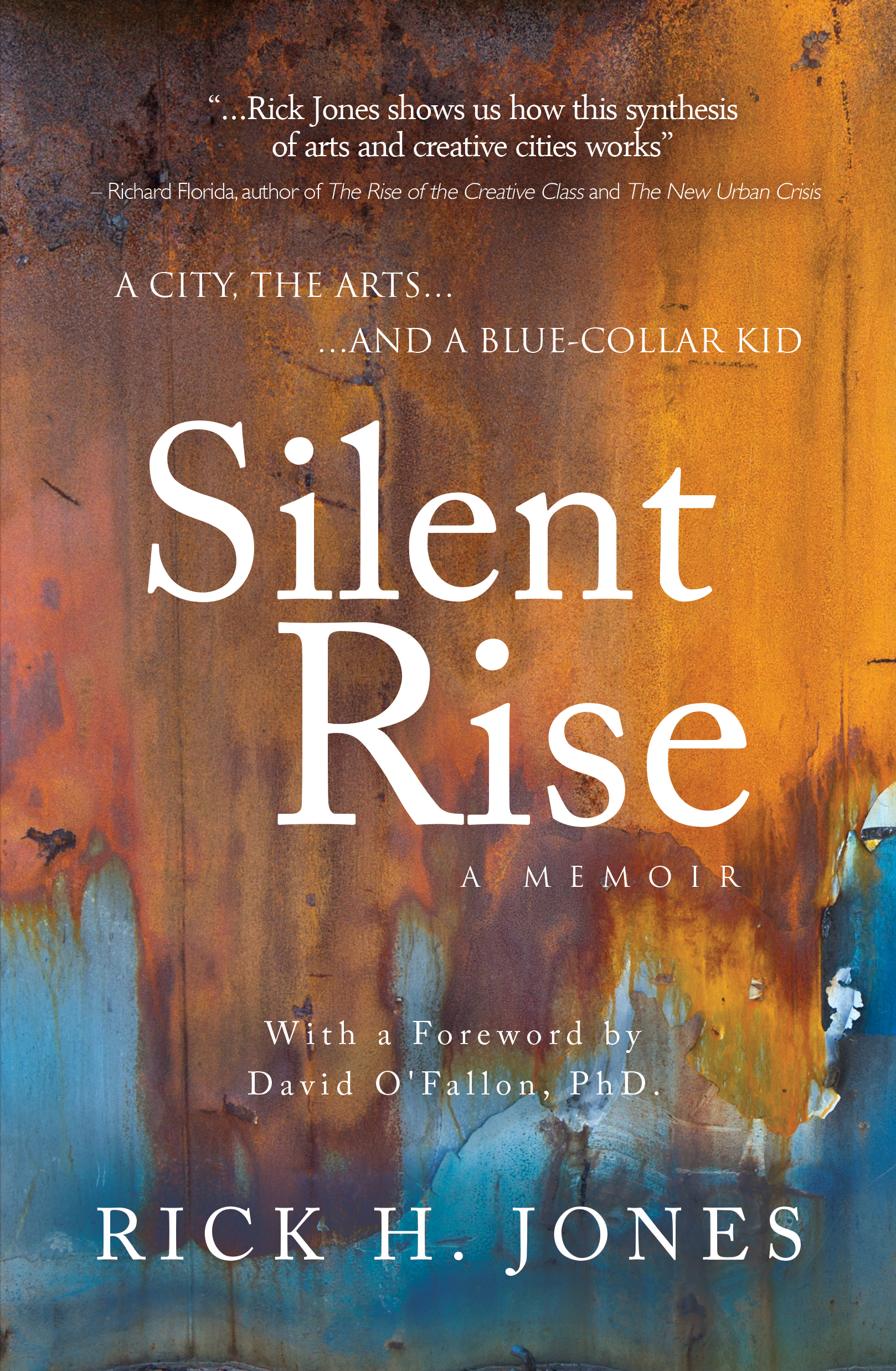
Silent Rise: A City, the Arts, and a Blue-Collar Kid
Overview
The city was spiraling out of control…teetering on the brink of economic and social disaster. Businessmen, politicians, and community leaders struggled with the growing plight. They hoped to turn the tide…but with the arts?
The Rust Belt city of Hamilton, Ohio, discovered in 1791, hoped to reverse the repeating cycle of economic decline, educational stagnancy, and social inequities, but only a few thought the arts could make any difference.
A blue-collar kid understands hard work. He also knows how to complete a task. When that kid decides to make his life in the arts, in the dichotomy of blue-collar and arts, he understands that “fine arts” will not be enough and will not be the best way to reach the ends his community hopes to achieve. He also knew that if success were to be had, the arts would have to be broadly defined as they were introduced to the public. The implementation of community arts for this author meant entrusting the arts to the hearts and minds of everyday people. The mission would be community excellence through the arts.
Hamilton was at the threshold of the town’s bicentennial; a cultural plan increased their hope. They listened to the people and decided to build a community arts center. Would this courageous—and many thought dubious—decision work?
This memoir by the man who was brought to town to lead this twenty-five-year journey shows how a struggling city utilized the arts to ignite the renaissance the city is now experiencing. This story of challenge, transformation, and hope is an honest and straight-forward account of what is required to lead with authenticity and achieve amazing results.
“…Rick Jones shows us how this synthesis of arts and creative cities works. It’s a message we need to heed now more than ever.” –Richard Florida, author of The Rise of the Creative Class and The New Urban Crisis


36,114 currently reading


152,889 want to read
Sponsored
Sponsored
Book details & editions
| ISBN | 1736726412 |
| Publisher | |
| Publication date | June 2021 |
| Language | English |
| Pages | 350 pages |
Sponsored
Sponsored




Ratings & Reviews
5 ★
76%
4 ★
18%
3 ★
4%
2 ★
1%
1 ★
1%
4.65
BlueReads Choice
Sponsored
Write a Review
Community Reviews
Sort by: