Sponsored
Sponsored
Free Edition
Verified Content
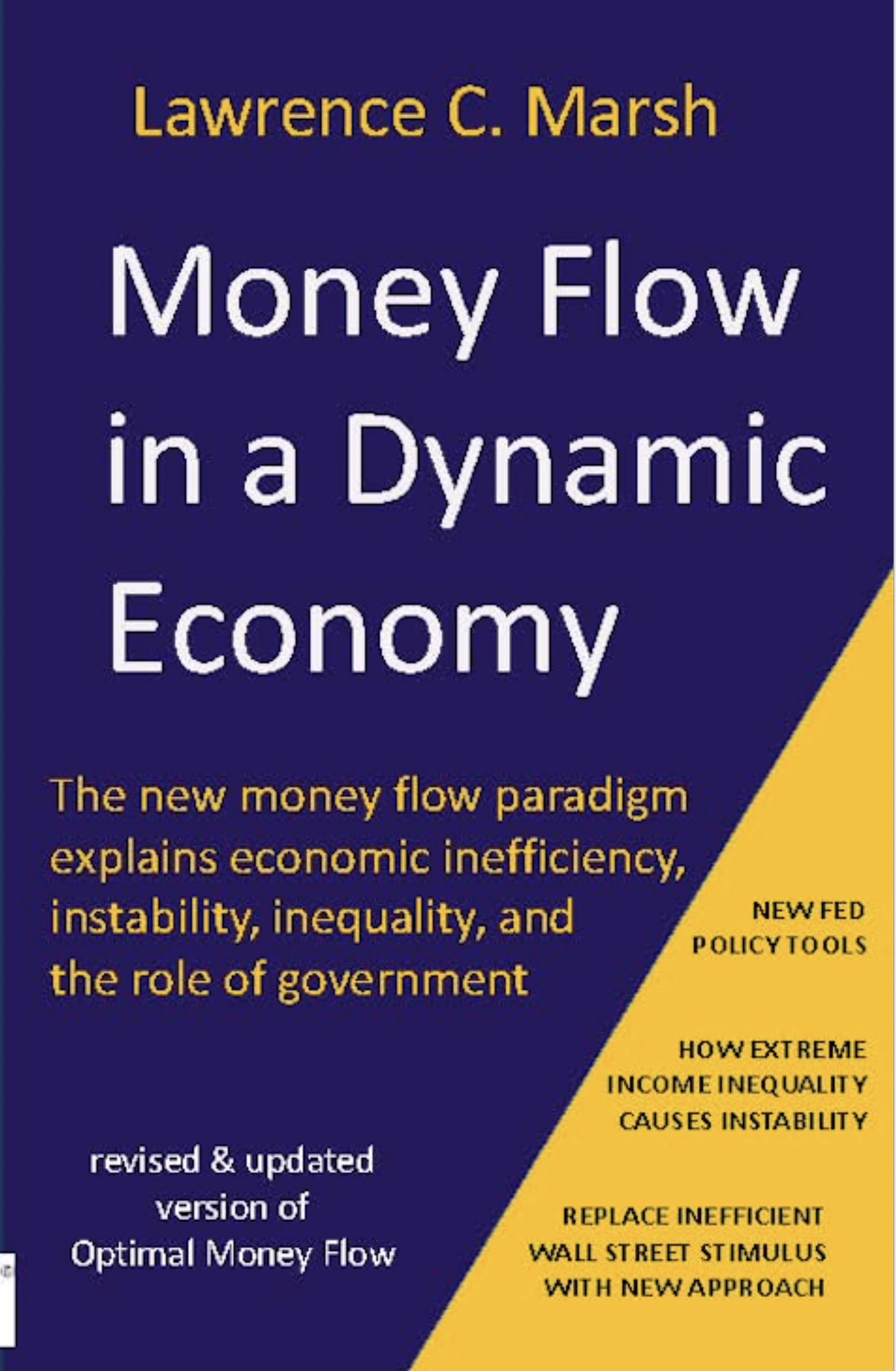
Money Flow in a Dynamic Economy
Overview
Distorted money flow has diverted so much money from Main Street to Wall Street that the middle class can no longer buy back the value of the goods and services that they are capable of producing at full employment. Consequently, middle class private debt has grown enormously. But even that is not enough to maintain full employment, so Republicans engage in deficit spending with unpaid for tax cuts and Democrats with unpaid for expenditures to avoid high levels of unemployment and large vote losses at election time. Instead of working directly with the real economy, the Federal Reserve operates exclusively through the New York financial markets. Over many decades, to stimulate the economy the Fed has diverted enormous amounts of money to Wall Street instead of directing that money to Main Street. While in recent decades our economy has been growing at about 3 percent on average each year, stock prices on average have been growing at 10 percent. This has suppressed productivity and economic growth by causing non-financial firms to invest their money on Wall Street that would have otherwise gone into producing more and better consumer goods more productively. The people on Main Street have lost out while the 10 percent richest people who own 84 percent of the stocks on Wall Street have gained enormous wealth. By restricting its operations to the New York financial markets, the Federal Reserve has only a weak and indirect effect on the real economy on Main Street. The Federal Reserve's cost-of-borrowing tool suppresses supply and demand to stop inflation and is brutal and ineffective risking recession. For over 50 years from 1911 to 1966 Americans could go to any post office to set up a savings account. By reissuing the Postal Savings Act of 1910, Congress could provide the Federal Reserve with a new return-on-savings tool offering 10 percent on savings (maximum $10,000) at any post office. Getting people to save more and spend less can stop inflation without sending our economy into a recession.


36,114 currently reading


152,889 want to read
Sponsored
Sponsored
Book details & editions
| ISBN | |
| Publisher | Avila University Press |
| Publication date | July 2023 |
| Language | English |
| Pages | 271 pages |
Sponsored
Sponsored




Ratings & Reviews
5 ★
76%
4 ★
18%
3 ★
4%
2 ★
1%
1 ★
1%
5.00
BlueReads Choice
Sponsored
Write a Review
Community Reviews
Sort by:







